North Hampton Families and Schools: A Practical Guide
April 23, 2026
April 23, 2026
If you are looking for a Seacoast town with room to spread out, everyday access to the outdoors, and a straightforward school setup, North Hampton deserves a closer look. For many buyers, the challenge is figuring out whether a town feels practical for daily family life, not just attractive on a map. This snapshot will help you understand how North Hampton works for growing households, from schools and commuting to housing style and outdoor space. Let’s dive in.
North Hampton is a small Seacoast town with about 4,543 residents spread across 13.9 square miles, according to the town’s overview and recent ACS-based data. The town is also notable for being on one of New Hampshire’s limited coastal stretches, which gives it a different feel than inland communities nearby. That coastal setting is a big part of the appeal if you want access to the ocean without giving up a more residential pace.
At the same time, North Hampton reads as an established community rather than a fast-changing growth center. The town’s housing master plan says 26% of households had children under 18 in 2020, while 30% of residents were over 65. For you as a buyer, that can suggest a place where family households are present, but the overall atmosphere may feel quieter and more settled than towns with a younger age profile.
For North Hampton residents, the public school path is simple. Students attend North Hampton School for grades PK-8, and then move on to Winnacunnet High School in Hampton for grades 9-12. That K-8 local school plus regional high school model is common on the Seacoast and often matters to buyers comparing nearby towns.
North Hampton School serves approximately 270 students, based on its 2023 annual report. The school’s family-facing resources include kindergarten registration, bus routes, PAL, athletics, and campus amenities such as a greenhouse, nature trails, a garden, and playing fields. If you are trying to picture day-to-day life, that points to a local school experience that is closely tied to the town itself.
If you have younger children, the local K-8 structure may feel convenient and community-oriented. If you are planning long-term, it also helps to know from the start that high school students attend a regional school in Hampton. That clarity can make North Hampton easier to evaluate if you want to think ahead about routines, transportation, and future transitions.
North Hampton is best understood as a car-oriented town with regional access. Census Reporter’s ACS profile lists a mean travel time to work of 24.6 minutes, and the town’s directions page points drivers toward I-95, Route 101, Route 111, and Route 1. In practical terms, daily life here is likely organized around driving to work, school, sports, errands, and appointments.
For many growing households, that setup is familiar and workable. North Hampton functions as a small residential base connected to the broader Seacoast road network, rather than a place built around walk-to-work convenience. If your routine already depends on driving, the town’s regional connections may feel like a natural fit.
North Hampton offers a modest but useful recreation setup for everyday family life. According to the town’s parks and fields page, Dearborn Park includes a playground, tennis courts, a pavilion, and softball and tee-ball fields. The Green hosts a summer concert series, and school-campus fields support soccer, field hockey, lacrosse, and baseball.
For a smaller town, those amenities can go a long way. They give you places for play, sports, and community events without needing to leave town for every activity. If you value simple, close-to-home recreation, this is one of North Hampton’s practical strengths.
Outdoor access is a major part of North Hampton’s identity. The town reports about 1,779 acres of conservation land, or 19.5% of its land area, along with roughly 10 miles of trail networks open to the public for year-round passive recreation. That is a meaningful amount of protected land for a town of this size.
If you want room to walk, explore, and spend time outside, this conservation network adds a quieter side to the North Hampton lifestyle. It also helps explain why some parts of town feel buffered and low-density even though you are still connected to the broader Seacoast region.
North Hampton also has direct coastal appeal. North Hampton State Beach is described by New Hampshire State Parks as a family-friendly oceanfront beach for swimming and picnicking, with public restrooms and paid parking. Pets are not allowed there.
That combination of beach access and inland conservation space is a big part of what sets the town apart. You get a real oceanfront component, but much of daily residential life can still feel quieter and more spread out away from the shoreline.
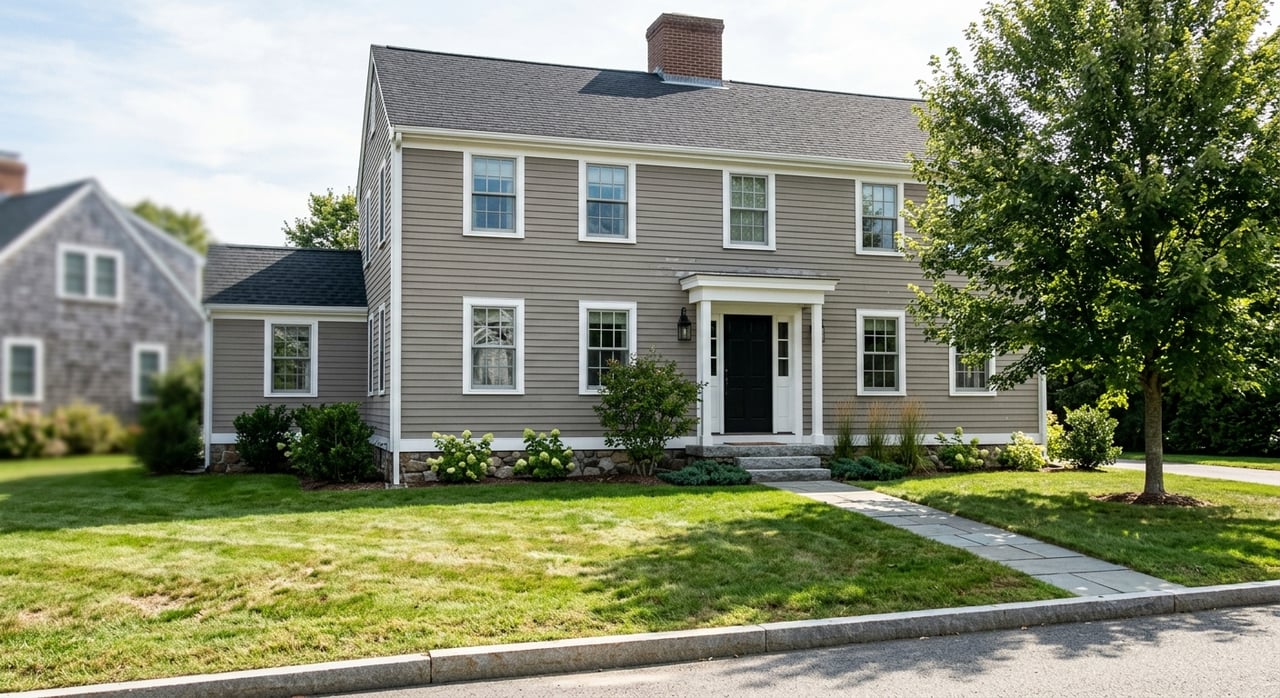
North Hampton’s housing stock is not one-size-fits-all. The town’s housing chapter shows homes from multiple eras, including pre-1930s properties, mid-century homes, and newer construction through the 2010s. If you are starting your search here, it helps to expect variety rather than one uniform neighborhood style.
The town is also predominantly owner-occupied. The housing summary includes 2,032 housing units, with 1,694 owner-occupied units, 212 renter-occupied units, and 102 seasonal units. For buyers, that can reinforce the sense of North Hampton as a stable residential market with a strong ownership base.
One reason North Hampton often feels open and spread out is zoning. In the R-1 and R-2 districts, the minimum lot area is 87,120 square feet, or 2 acres, with minimum frontage of 175 feet. Those standards help shape the town’s spacious suburban character.
If you are moving from a denser area, this can be one of the biggest lifestyle differences. Larger lots may offer more separation between homes and a lower-density feel, which can appeal to buyers who want more space for everyday living and outdoor use.
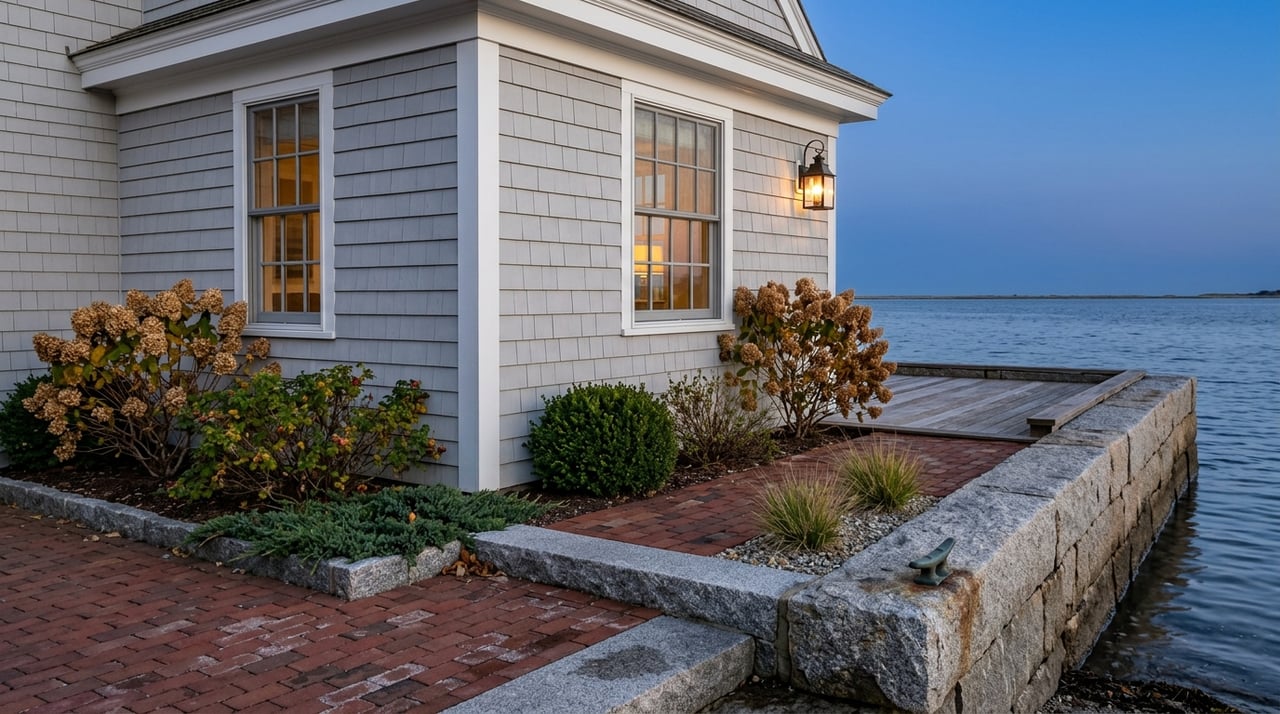
North Hampton is not all the same from one area to another. The housing chapter notes that Little Boar’s Head is the seaward extent of town and functions as a separate village district with its own zoning authority. That matters because the coastal side of town can feel distinct from inland residential sections.
You may also come across neighborhood names such as The Boulders, Country Club Estates, Little Boars Head Historic District, and Ship Rock Estates as you research the market. The key takeaway is not that one area is inherently better than another, but that North Hampton offers several different living environments within a relatively small town.
For many buyers, North Hampton works best if your priorities include space, a local K-8 school, outdoor access, and a quieter residential setting. The town combines a straightforward school structure, car-based regional access, a small-town recreation system, conservation land, and real beach access. That mix can be especially appealing if you want a Seacoast lifestyle with a more spacious feel.
It is also important to go in with clear expectations. North Hampton is not a dense, highly walkable downtown environment, and its housing baseline is relatively high, with a recent ACS-based median owner-occupied home value of $670,400. If your move-up search is focused on room to grow and long-term livability, though, North Hampton may be one of the more compelling towns to explore on the New Hampshire Seacoast.
If you are weighing North Hampton against other Seacoast towns, working with a local team can help you compare lot sizes, neighborhood patterns, commute tradeoffs, and the overall feel of different parts of town. If you want guidance tailored to your goals, connect with Emil Uliano for thoughtful, local insight on buying or selling along the Seacoast.
Stay up to date on the latest real estate trends.
We are committed to guiding you every step of the way—whether you're buying a home, selling a property, or securing a mortgage. Whatever your needs, we've got you covered.
40 Pleasant St Portsmouth NH 03801