The Second Government Hiding Inside North Hampton's Median Price
August 27, 2026
August 27, 2026
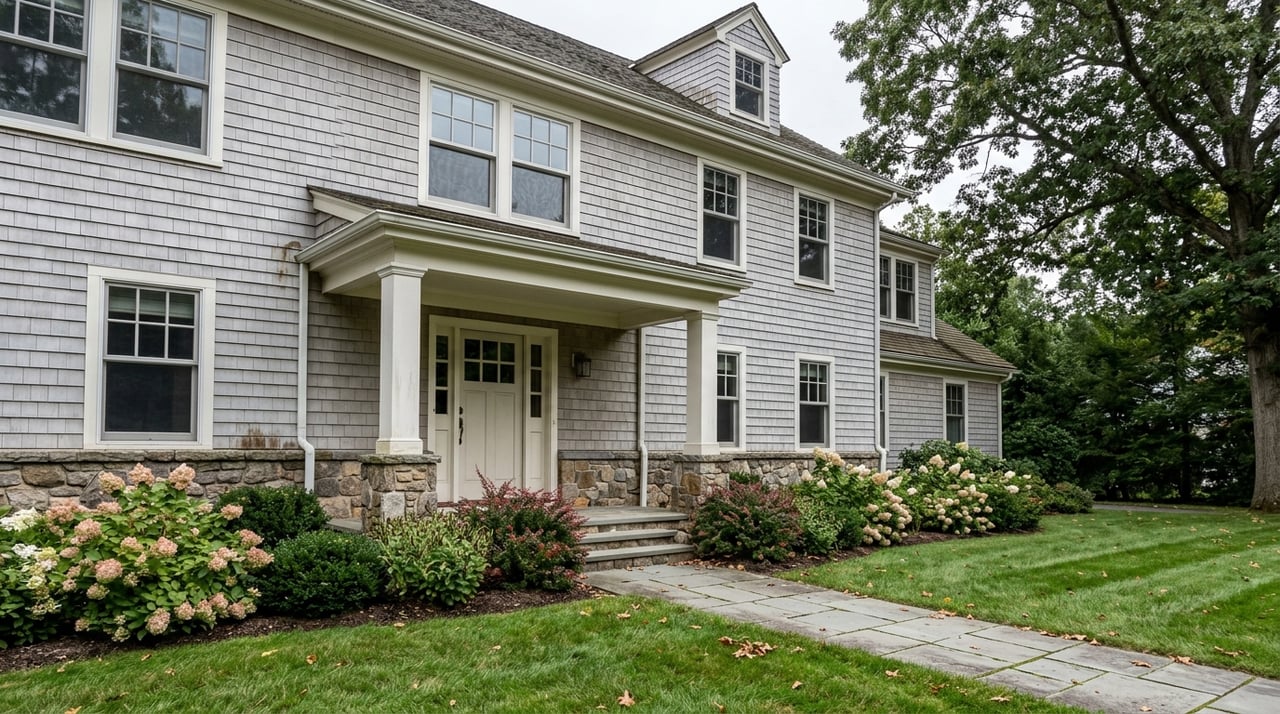
A buyer touring North Hampton this month will see two very different kinds of houses on the same afternoon. One is a shingled ranch on a half-acre west of Route 1, priced somewhere in the low $600,000s. The other is a Colonial-era cottage on Ocean Boulevard, priced north of $2 million, close enough to hear the surf. Both addresses say North Hampton on the deed. Only one of them answers to a second government before it answers to the town.
That second government is the Village District of Little Boar's Head, and understanding what it actually does, and does not do, changes how you should read every price you see for this town.
Little Boar's Head is not an informal name real estate agents use for the pretty part of the coastline. It is a Village District created by an Act of the New Hampshire Legislature in 1905, and it covers the seaward portion of North Hampton as its own governed territory. The district has elected Commissioners, currently Brian Goode as chairman along with Margaret Schoenberger and Robert A. Southworth Jr., and it holds its own annual meeting on the first Tuesday of September, with the 2026 meeting scheduled for September 1, just over a week from now. Anyone closing on a coastal property this year should know that date matters: it is when the district sets its own small budget and votes on its own warrant articles, separate from anything North Hampton's town meeting decides.
The district also runs its own zoning. Its ordinance divides the coast into named districts you will not find on a standard town map: a Residential Zoning District, a Bathhouse Zoning District running along the state beach parking area, and a Fish House Zoning District tucked along the shoreline near the old stone wall. A building permit inside the district follows a different sequence than one three miles inland. The North Hampton Building Department will not approve a building permit within Little Boar's Head until the applicant has first secured a Zoning Compliance Certificate from the district's own Zoning Board of Adjustment. The town inspects and enforces building code afterward, but the district decides whether the project is allowed to exist at all.
The district goes further with historic structures. Its ordinance includes a demolition review process built specifically to slow down or document the loss of Little Boar's Head's older buildings, with the district's own zoning inspector weighing in before a teardown can proceed. Participation is voluntary for the property owner, but the process exists, and it does not exist anywhere else in North Hampton.
Here is where most people guess wrong. A separate government sounds like it should mean a separate, meaningful tax burden, the kind of thing that shows up as a line item worth negotiating around. It does not work that way here.
According to the New Hampshire Department of Revenue Administration's 2025 village district tax rate filing, the Little Boar's Head precinct rate is $0.11 per $1,000 of assessed value. That is layered on top of the same town, local school, county, and state education rates every North Hampton property already pays. On a $2 million assessment, the precinct line alone adds about $220 a year. It will not move anyone's offer.
So if the district's fiscal reach is nearly invisible, where does its power actually live? In what it lets get built, and what it lets get torn down. A coastal buyer is not paying a premium because the district taxes them more. They are paying a premium because the district makes new supply harder to add and older stock harder to replace, which is a scarcity story, not a tax story. That distinction matters if you are trying to explain to yourself, or a spouse, or a lender, why the price gap between two North Hampton addresses looks so much larger than the tax bill would suggest.
Portal data for North Hampton in August 2026 put the town's median list price at roughly $995,000, with homes spending a median of 49 days on market. That number is real, but it is also a blend of two markets that operate under different rules, and blended medians flatten exactly the story a buyer needs to understand before making an offer.
Aggregated listing data for the town this year shows inland properties typically priced between $500,000 and $1 million, while waterfront homes range from $1 million up to $5 million. A single town-wide median sitting near $995,000 lands almost exactly between those two bands, which is a strong hint that it is not describing either market well. Comparing "North Hampton's median" to a neighboring town's median, the way most buyers do their first pass of research, means comparing a blended figure to a more uniform one, and drawing conclusions that do not hold up once you separate the coast from the interior.
The inland side has its own identity worth understanding on its own terms. It carries the North Hampton School district's residential character further from the water, larger lots, and zoning that still accommodates horses and outbuildings in ways the coastal district does not. Runnymede Farm, the North Hampton horse farm once owned by the Fuller family, is where Dancer's Image was kept and trained before he crossed the finish line first at the 1968 Kentucky Derby, only to be disqualified days later after a positive drug test. That farm still sits inland and reflects the same equestrian tradition that shapes how much of the town's western side is used and zoned today. Buyers priced out of the coastal district's scarcity, and unwilling to deal with its extra permitting step, increasingly look here instead, which helps explain why inland growth has been a real story in North Hampton this year even while the coastal strip behaves like its own closed market.
| North Hampton (town-wide) | Village District of Little Boar's Head | |
|---|---|---|
| Formed | Town incorporated 1742 | Chartered by NH Legislature, 1905 |
| Zoning authority | Town Planning Board | District's own Zoning Board of Adjustment |
| Building permit path | Town Building Department | District certificate required first, then town |
| Historic demolition | No separate district review | Voluntary demolition review process |
| Extra tax line | None | Precinct rate, $0.11 per $1,000 (2025) |
| Annual meeting | Town meeting | First Tuesday in September, district only |
If you are looking at a Little Boar's Head property, build the district's approval step into your renovation or new-construction timeline before you build your budget around it. A project that would take one round of town approval elsewhere may need a Zoning Compliance Certificate from the district first, and if the structure is older, a conversation with the district's zoning inspector about demolition review before you can even get a permit application moving.
If you are selling inland, the story worth telling is not "close to the coast." It is acreage, zoning flexibility, and the fact that the North Hampton School district doesn't distinguish between a coastal or inland address, only the deed does. That is a genuinely different pitch than the one for an Ocean Boulevard listing, and treating them the same in a listing description undersells both.
Either way, the town's median price is a starting point, not an answer. Getting to the real number for a specific address means knowing which government it answers to first.
Does a Little Boar's Head property get two separate tax bills? No. The precinct rate is folded into the same semiannual town tax bill everyone in North Hampton receives, itemized as its own small line rather than billed separately.
Does every renovation inside the district need district approval, or just new construction? The district's Zoning Compliance Certificate requirement applies to building permits generally, not only new construction. Whether a specific renovation triggers full review or a lighter check depends on scope, which is exactly the kind of question worth asking the district's zoning inspector before you assume a project's timeline.
If you are weighing a North Hampton purchase against Rye or New Castle, or trying to price a listing correctly on either side of Route 1, Emil Uliano and Jackie Mee at SellingTheSeacoast work these towns closely enough to know which government you're dealing with before you sign anything. Start with a free home valuation or browse the North Hampton neighborhood guide to see how the coastal and inland markets actually compare.
Stay up to date on the latest real estate trends.


We are committed to guiding you every step of the way—whether you're buying a home, selling a property, or securing a mortgage. Whatever your needs, we've got you covered.

40 Pleasant St Portsmouth NH 03801