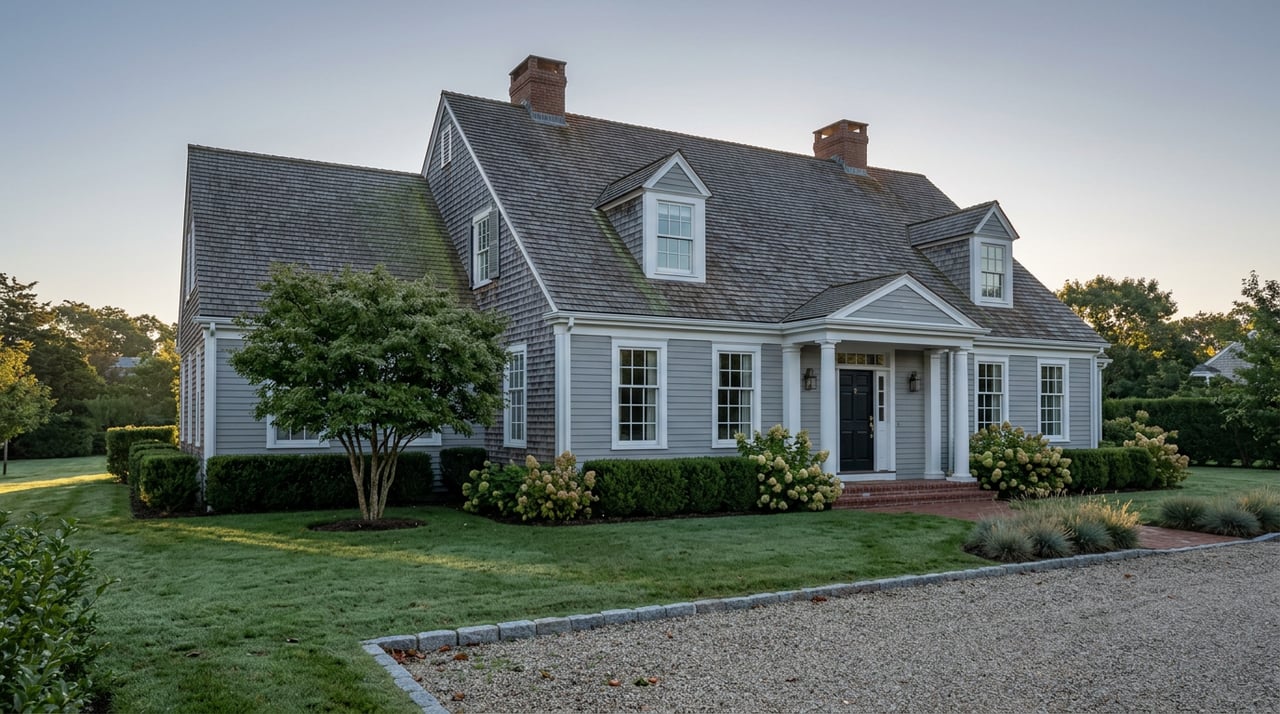
Portsmouth NH Housing Inventory Is Shrinking. Days on Market Are Growing Anyway.
September 10, 2026
September 10, 2026
Ask a Portsmouth home to go from listed to pending, and the answer sitting on every portal right now is fast. Zillow's July 2026 read on the city put the average home value at $802,763, up 3.3% over the past year, with homes moving to pending in roughly 15 days. Fifteen days. That is the kind of number that makes a buyer feel like they need to have a pre-approval letter loaded before they even open the map.
Now ask a different question. How long is a $1.5 million historic property, a waterfront estate in the South End, or a serious downtown renovation sitting active before it finds a buyer? The answer, according to market data on Portsmouth's luxury segment heading into 2026, is 43 to 59 days. Not 15. Three to four times longer.
Both numbers are true. Neither one describes the whole city. And the gap between them is the thing worth understanding before you trust either one.
Portsmouth's single headline days-on-market figure is an average, and averages hide the shape of what they're averaging. In a market where most transactions cluster in a familiar mid-range, that band's speed pulls the blended number toward fast. Meanwhile, the properties that carry Portsmouth's reputation, the ones that show up in sold galleries and drive the city's median price north of a million dollars in the right months, are running on an entirely different clock.
By mid-2025, Portsmouth's luxury median had climbed to roughly $970,000 year-to-date, a 14.1% increase, and in a month like May 2025 it briefly crossed $1.2 million, a 38.7% jump from the year before. That's not a fluke. It signals that seven-figure sales in Portsmouth are now the norm in that segment, not the exception. But a market crossing into seven figures as routine business is also, almost by definition, a market with a smaller buyer pool and a longer diligence process per transaction. Financing gets more complex. Inspections take longer. Fewer buyers are pre-qualified at that level, and the ones who are tend to move deliberately rather than on impulse.
Here's how the two speeds line up:
| Segment | What's happening to price | Typical time to sale |
|---|---|---|
| City-wide blended average | $802,763 average value, up 3.3% year over year (July 2026) | About 15 days to pending |
| Luxury / historic / waterfront | Median near $970,000 YTD by mid-2025, briefly topping $1.2M | 43 to 59 days, versus 15 to 20 during the 2021-22 frenzy |
If you are shopping or listing anywhere near that second row, the 15-day headline is close to useless to you. It was never describing your transaction.
The interesting part is not that luxury takes longer than average. That's expected everywhere. The interesting part is why Portsmouth's luxury segment specifically saw its timeline stretch even as the rest of the city stayed tight.
Inventory in that top tier actually grew. New listings in Portsmouth's higher-end segment rose more than 30% in mid-2025, and overall inventory in that band was up somewhere around 105% compared to the year before. More choices for buyers at that price point means less pressure to act on the first showing. A buyer looking at three comparable waterfront properties instead of one is going to take the time to compare them, and that comparison shopping is exactly what shows up as a longer average days-on-market.
Meanwhile the rest of the single-family market moved in the opposite direction. Structurally, Portsmouth's everyday single-family supply has been shrinking for a decade, from well over a hundred active listings in the mid-2010s down into the teens in more recent readings. That kind of scarcity does the opposite of what it does at the luxury end. When there's almost nothing available in a price band buyers can actually compete for, the few homes that do list get absorbed quickly, because there's no meaningful alternative sitting next door to compare against.
So the same city produces two mechanisms at once. Scarcity at the everyday level compresses time to sale. Choice at the luxury level extends it. Neither is a contradiction once you separate them, but blended into one citywide number, they look like they cancel each other out into something misleadingly average.
Part of why the entry and mid-market single-family band stays scarce comes down to a phenomenon that's been documented across the country: the mortgage rate lock-in effect. Homeowners sitting on rates secured years ago are, on average, saving around $511 a month by staying put rather than selling and buying again at today's rates. Analysts have estimated this effect alone kept roughly 1.33 million sales from happening nationally between mid-2022 and late 2023. That reluctance to trade a low rate for a higher one doesn't reverse overnight, and it shows up locally as exactly the kind of everyday-segment scarcity Portsmouth has seen.
Rockingham County's broader numbers back up how tight the mid-market has stayed even as luxury loosened. Over the three months ending in April 2026, the county's median sale price sat at $608,000, down 1.6% from the same period a year earlier, with homes taking an average of 34 days on the market compared to 21 days the year before, on 283 total sales versus 301. Mortgage News Daily's tracking, cited in a Rockingham County mid-year review published in July 2026, put mortgage rates generally in the mid-6% range through the first half of the year, a level still high enough to keep many otherwise-willing sellers on the sidelines.
Josh Greenwald, president of the New Hampshire Association of Realtors, summed up the pattern in April 2026 by noting that "demand still continues to outpace supply, keeping upward pressure on home prices." That's true statewide. In Portsmouth, it's true in a very specific, segment-dependent way.
If you're pricing a listing or comparing markets, the fix isn't to ignore the headline days-on-market number. It's to ask which segment it actually describes before you rely on it.
Portsmouth's neighborhood page breaks down more of what distinguishes the South End, the downtown core, and the outer residential streets, since each of those pockets skews toward one segment or the other more than the city average suggests.
Does a longer days-on-market always mean a price is wrong? Not in the luxury segment right now. A property sitting 45 days in that tier can simply reflect a smaller buyer pool taking its time, not a pricing mistake. Context on comparable recent luxury closings matters more than the raw day count.
Is the everyday single-family market going to loosen up soon? It depends largely on mortgage rates. As rates ease and more locked-in owners feel comfortable trading up, expect the scarcity in that band to ease with it, though the timeline for that shift isn't something anyone can pin down with precision.
Where can I check current numbers myself? The New Hampshire Association of Realtors publishes monthly market indicators built from statewide MLS data, useful if you want to track how these two clocks are moving from month to month.
If you're weighing a move in Portsmouth and want to know which clock actually applies to the property you're eyeing or the one you're about to list, that's a conversation worth having before you anchor to a single number from a portal. SellingTheSeacoast works these segments daily, from downtown condos to seven-figure waterfront closings, and can walk you through what the current data means for your specific situation. Request a free home valuation to start with numbers built around your property, not a citywide average.
Stay up to date on the latest real estate trends.
We are committed to guiding you every step of the way—whether you're buying a home, selling a property, or securing a mortgage. Whatever your needs, we've got you covered.
40 Pleasant St Portsmouth NH 03801